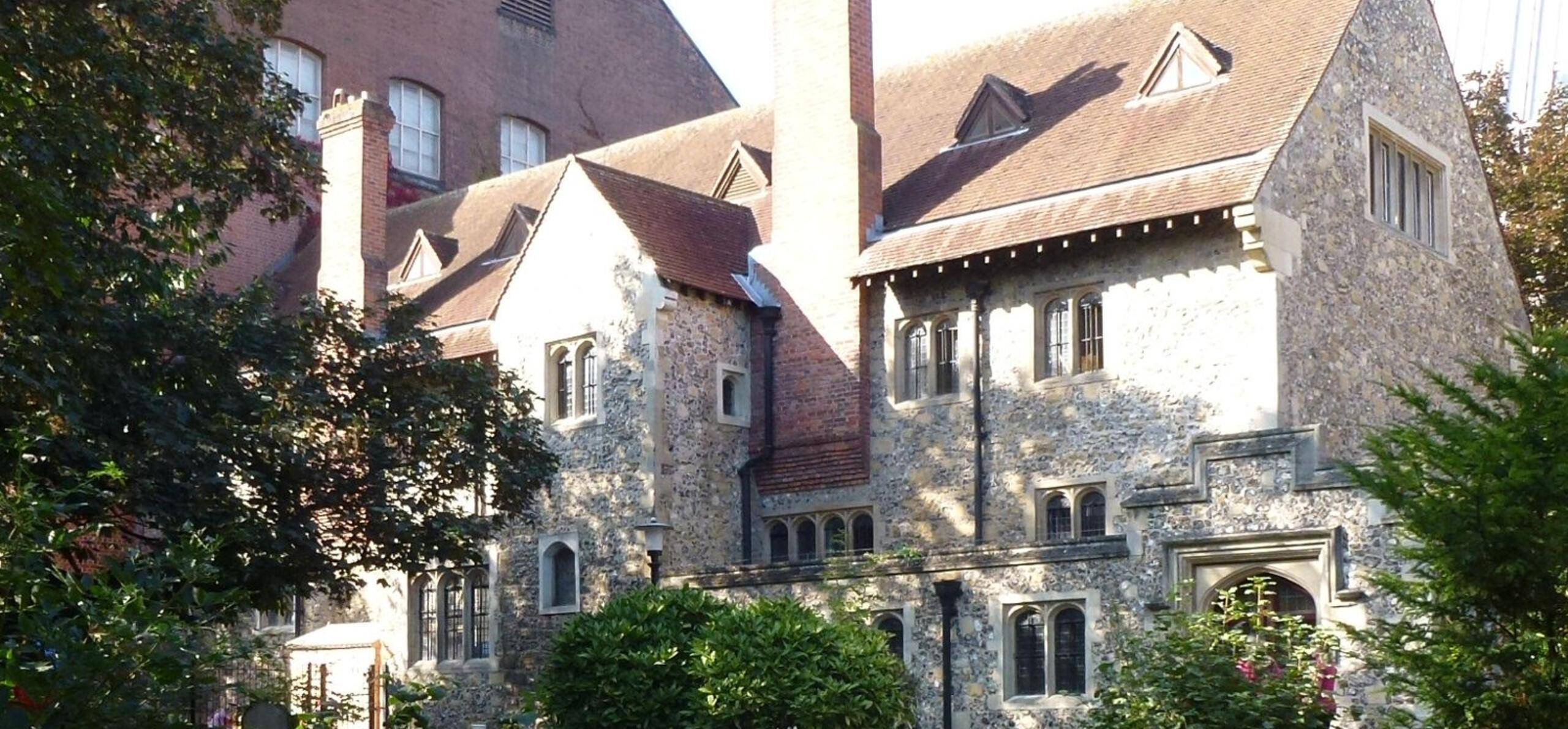
The building beside St Laurence's churchyard was once the dormitory of Reading Abbey’s Hospitium of St John the Baptist (guesthouse). Pilgrims and other visitors to Reading could stay here for two nights, for free, so long as they went to services at the abbey church. In 1486 a boys’ school run by Reading Abbey moved into the Hospitium. In the late 19th century, the Hospitium became home to University College, Reading, which grew into the University of Reading.
Mary Tudor gave this piece of land to St Laurence’s for burials in 1557. People from the parish of St Laurence had previously been buried by the abbey church, but lost their burial ground when the abbey closed.
Digging Deeper - the origins of Reading University
The origins of the University of Reading lie in the first international celebration of technology, the Great Exhibition of 1851. This produced enough of a surplus to set up ‘Schools of Science and Art’ around the country. Reading got an Art School in 1860 and a Science School in 1870; in 1882 they merged, moved to Valpy Street in part of the Town Hall, and formed a miniature technical college for the men and women of the town.
University education came to Reading in 1885 with an Oxford University ‘extension unit’, and in 1892 this merged with the Schools of Science and Art to form the University College based in the former Hospitium building and neighbouring St Laurence's Vicarage. The old dormitory was restored to house laboratories for the new University College. The College expanded its range of subjects and the demand for space prompted a new campus on London Road, funded by generous benefactors such as the Palmer family and Lord and Lady Wantage, that opened in 1906.
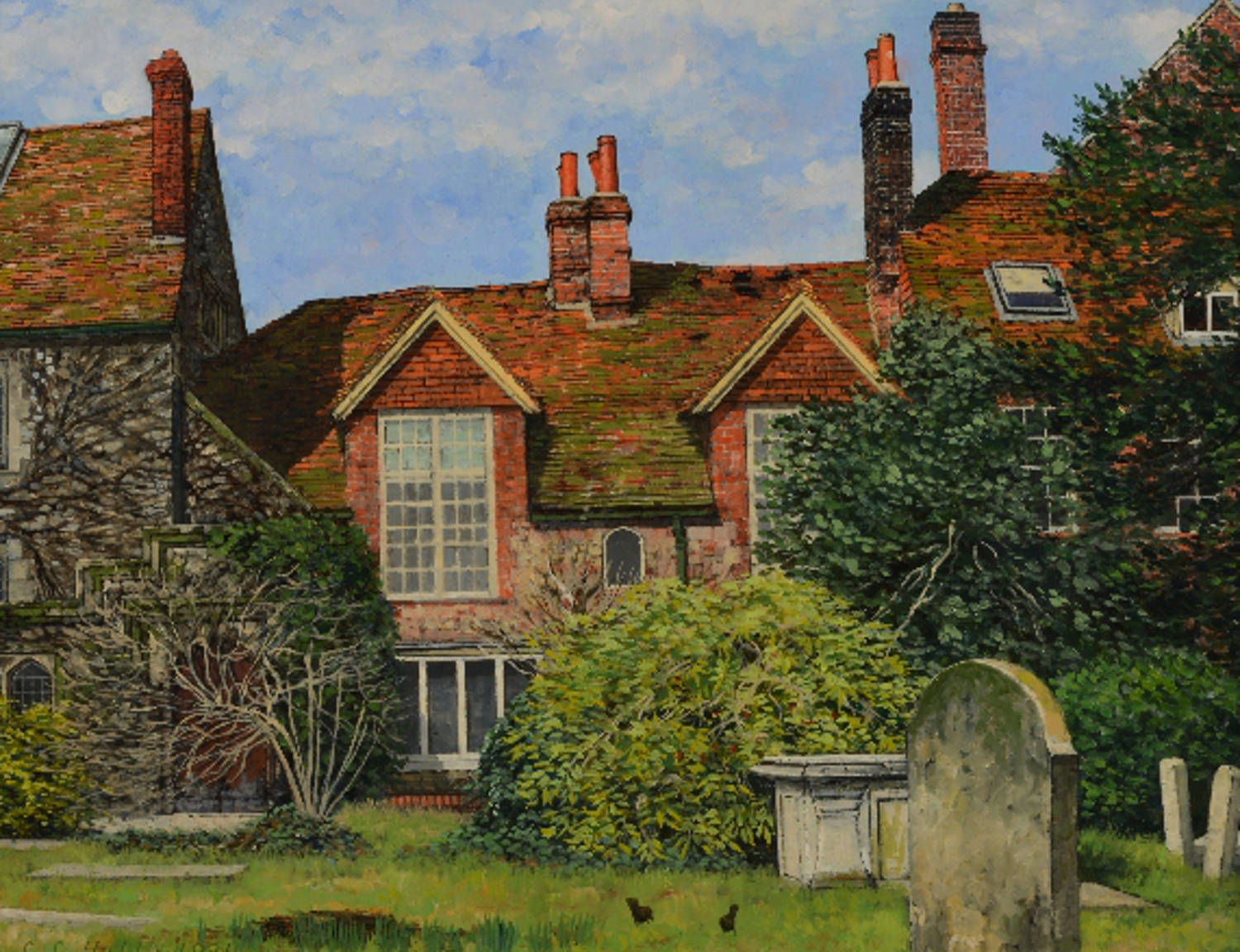
Detail from Christopher Hall's painting of St Laurence's Vicarage which was demolished in 1981 (museum no. 1982.88.1)
Henry West - 'who lost his life in a whirlwind'
Just six days before the opening of Reading Station on 24 March 1840, a freak whirlwind struck Reading. It ripped off a 4-ton section of the station roof. Henry West a young man who was fixing the glazing of the roof at the time, was hurled to his death. He is buried in St Laurence’s churchyard, where his wooden memorial originally put up by his fellow workmen can still be seen.
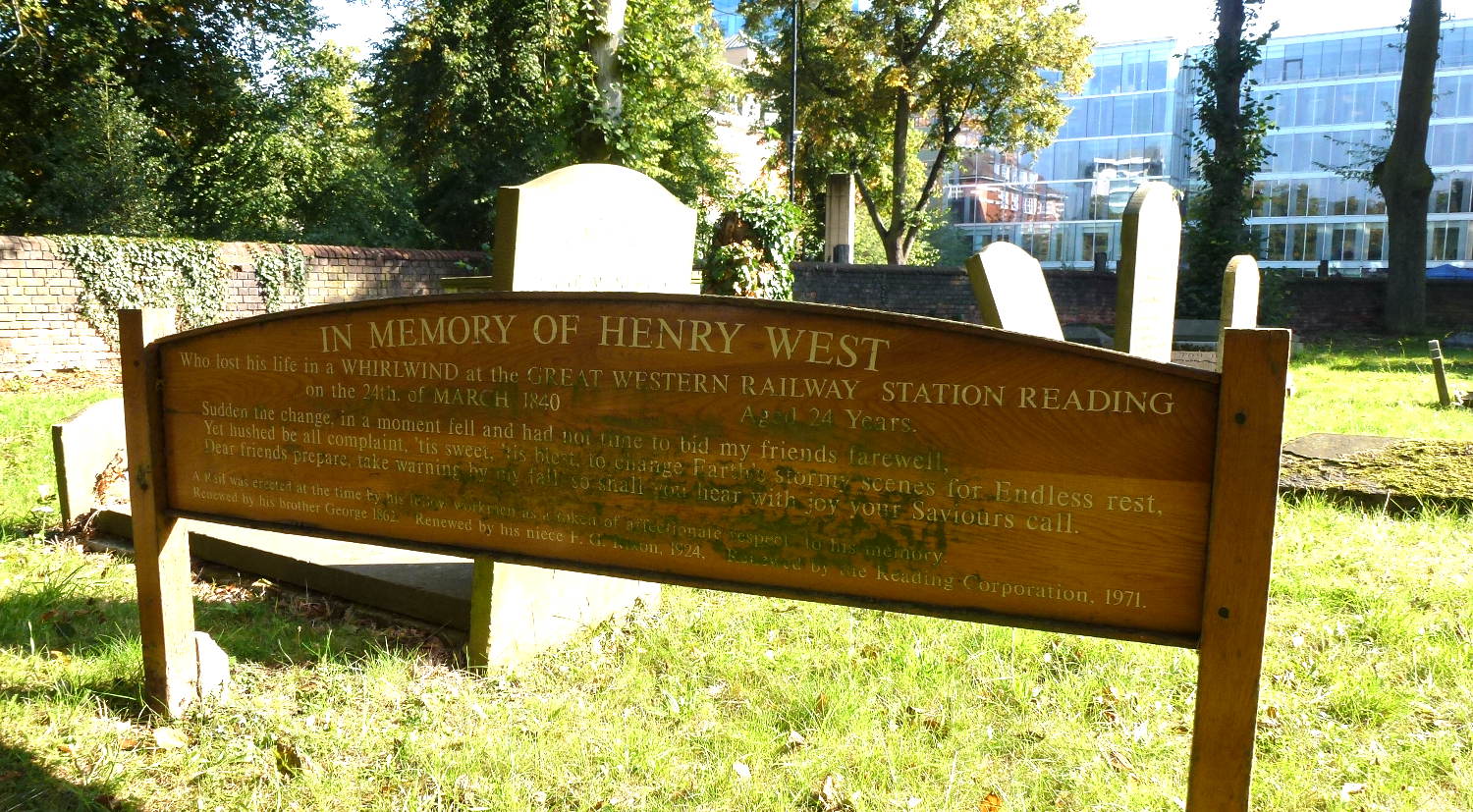
Wooden grave board in memory of Henry West
Medieval window tracery
Close to Henry West’s grave there is part of a 15th century stone window, with some earlier 12th century stonework incorporated on each side of the tracery. These architectural fragments were relocated to St Laurence’s churchyard from the garden of 10 Abbot's Walk in the mid-1980s.
The tracery mostly consists of the former west window of St Laurence’s that was removed during the church’s restoration in 1881-2 and was then presumably moved to 10 Abbot’s Walk as a garden feature.
The stone plaque that says this was the window ‘dislodged during enemy action on February 10th 1943’ is incorrect. The west window that the Victorians replaced was totally destroyed by high explosives during that fatal air raid on Reading during the Second World War.
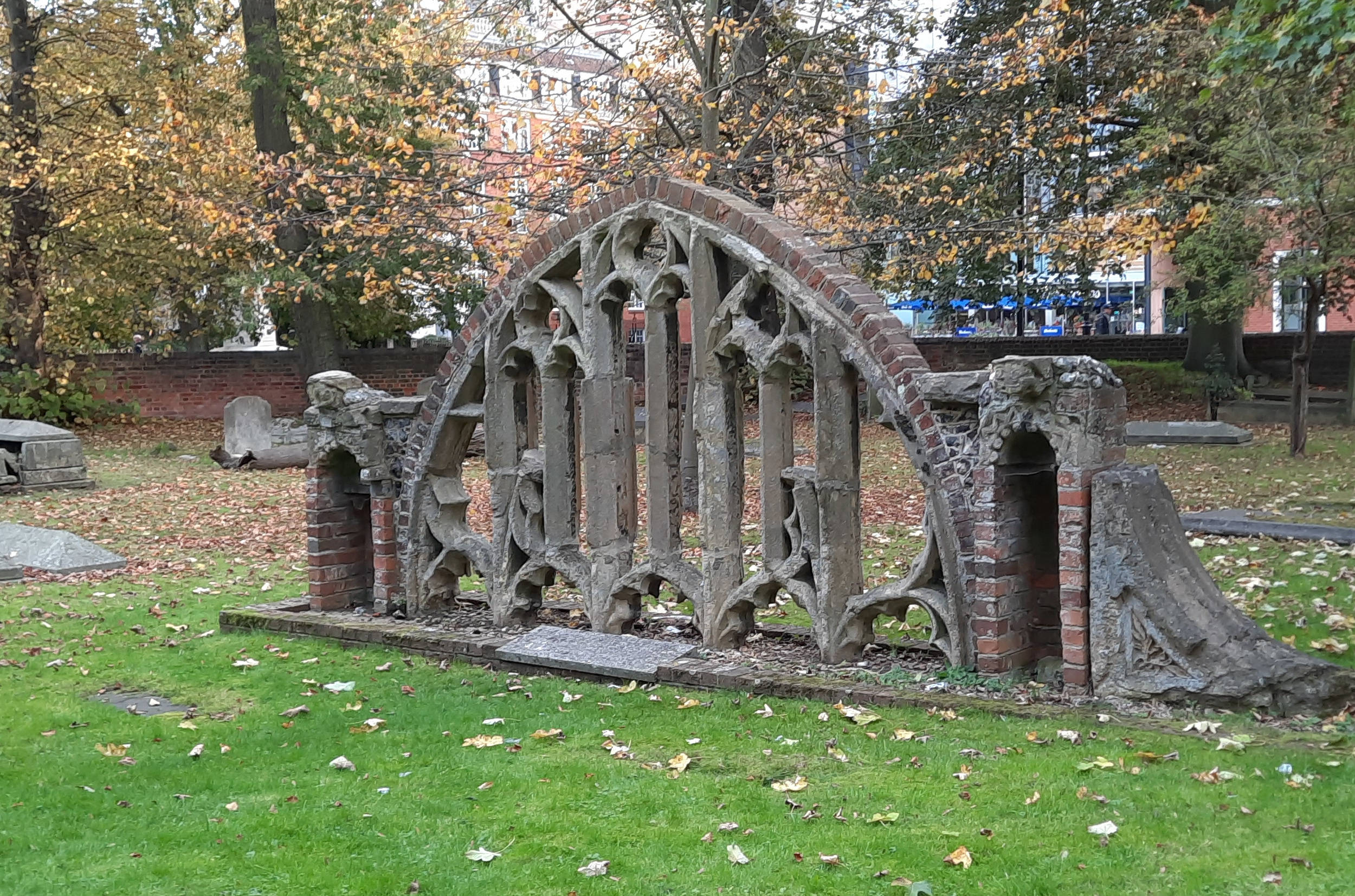
12th century niches and 15th century window tracery in St Laurence's churchyard, Reading