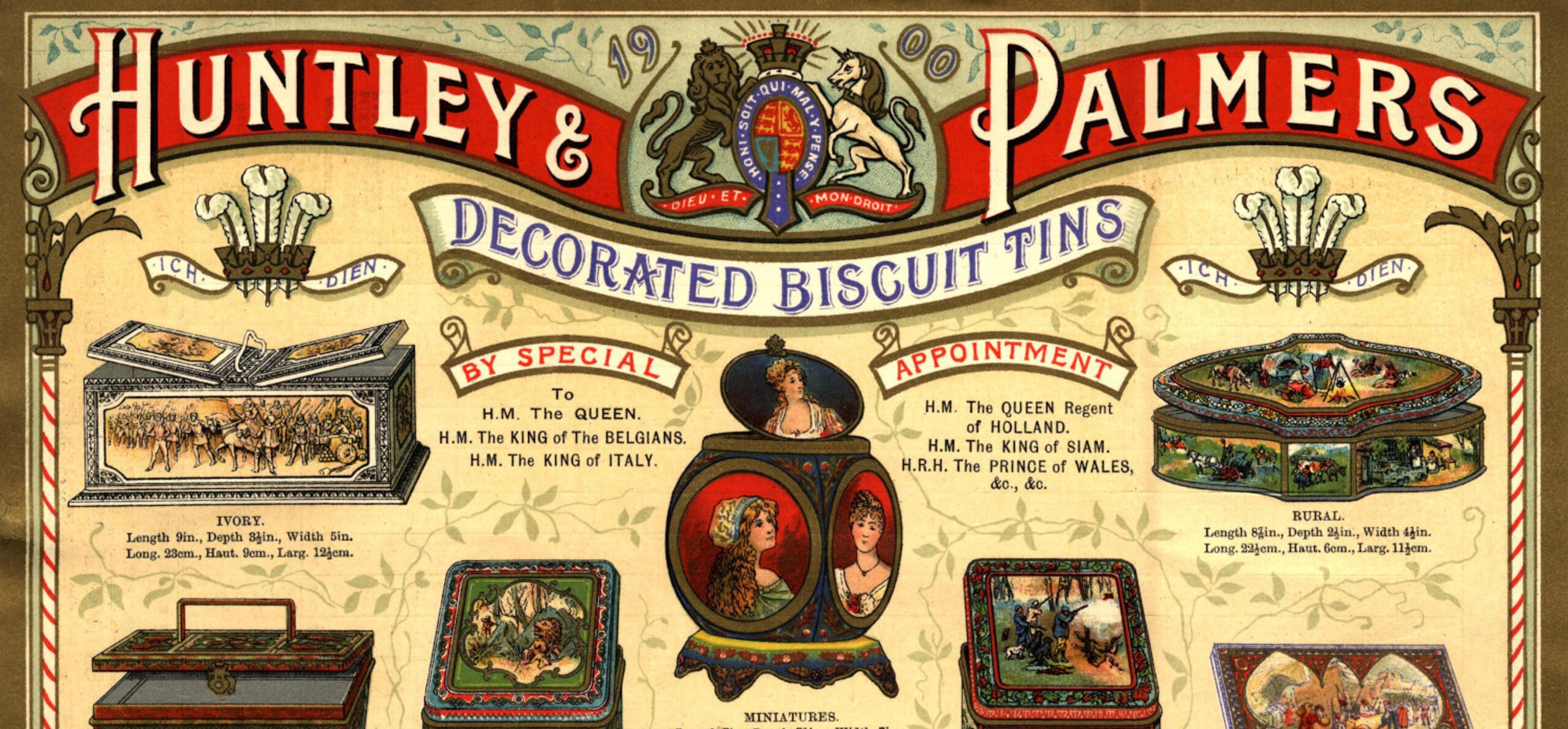
Guest blogger Zoe Handy shares how her fascination for all things miniature led her to solve a 100-year-old royal mystery from Reading Museum’s collection…
As a long-time collector and restorer of vintage and antique dolls’ houses, I’ve spent many years researching the fascinating world of miniature craftsmanship. One of the most famous examples of miniature artistry is Queen Mary’s Dolls’ House, which celebrated its 100th anniversary in 2024, having been created in the 1920s as a showcase of post-war British talent and ingenuity.
Every tiny item in the Dolls’ House - from books and wine bottles to tea sets and vacuum cleaners - was crafted by leading artists and manufacturers of the time, including the famous Reading-based biscuit company Huntley & Palmers.
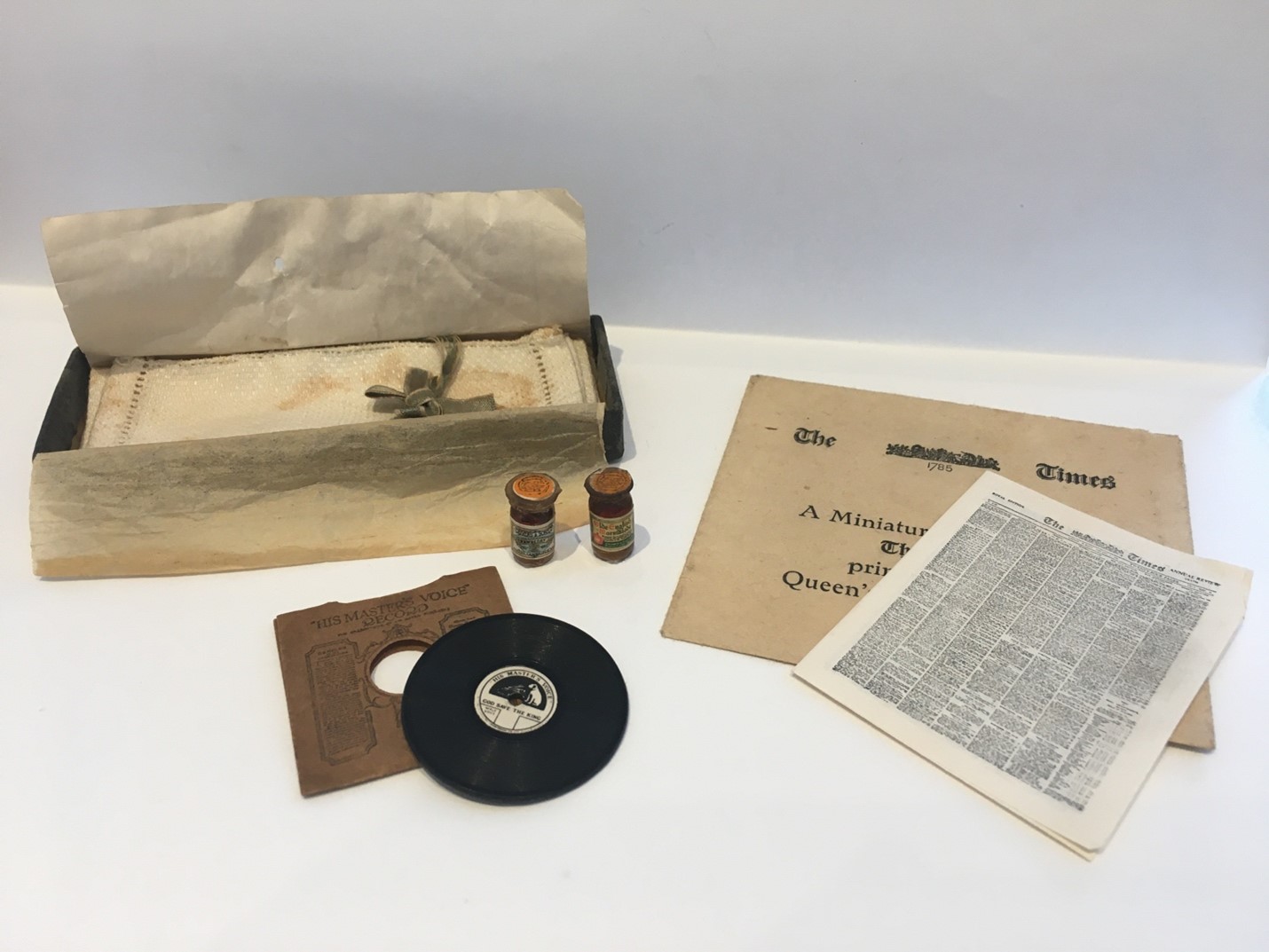
Queen Mary’s Dolls’ House replica miniatures: Old Bleach towels, Chivers & Sons jam and marmalade, The Times newspaper, HMV ‘God Save the King’ gramophone record. Photo © Zoe Handy
While researching the Dolls’ House, I wrote an article focusing on the twelfth-scale replicas of items created by British manufacturers for this royal miniature masterpiece, some of which were also sold to the general public. These delightful miniatures occasionally appear online in collections or auctions and identifying them has become something of a passion project for me.
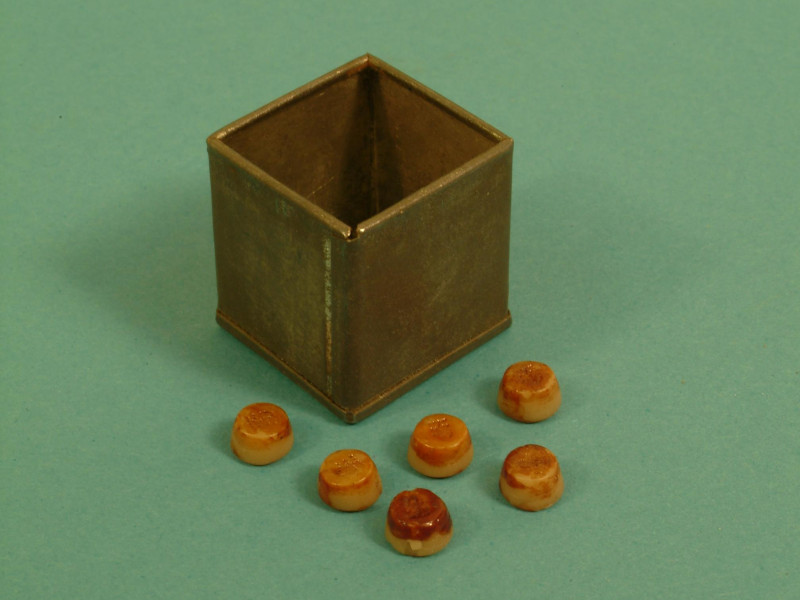
Twelfth Scale replica miniature of Huntley and Palmers Ginger Nut biscuits made for Queen Mary’s Dolls’ House, from Reading Museum's collection. Object no. 1992.2.1074. Measurements: H 2.2cm, W 2cm and D 2cm. © Reading Museum
During this research, I came across something intriguing in Reading Museum’s online collection of Huntley & Palmers biscuit tins: a biscuit tin that was notably smaller than the others in the archive.
It was described on the museum’s online collection as "a miniature tin without decoration containing six tiny synthetic biscuits stamped with the letters H and P."
This is a puzzling tin. The absence of decoration makes it impossible to date - and what are the tiny imitation 'biscuits' for? They look as if they may be intended to represent Nursery Biscuits […] In 1926 Huntley and Palmers produced a draughts board as a promotional novelty, with the pieces in the form of dark and light coloured biscuits. The 'biscuits' in this tin are different, but could have been used as counters. Any other suggestions?
Reading Museum - Online Collections entry
To my delight, I recognised the piece straight away - it was not just a small tin, but a rare twelfth-scale replica, or possibly prototype, of the Huntley & Palmers biscuit tins created specifically for Queen Mary’s Dolls’ House.

Miniature tins of Huntley and Palmers biscuits made for Queen Mary’s Dolls’ House and each measuring 2.2 x 2.2 x 2.0 cm. Photo © Royal Collection Enterprises Limited 2025 | Royal Collection Trust
These miniature tins were meticulously crafted to reflect the design and branding of the full-sized versions, making them a perfect addition to the Dolls’ House’s well-stocked pantry.
It was incredibly rewarding to be able to help identify the tin and confirm its royal connection and I’m grateful to Reading Museum for preserving this tiny treasure and through it, Reading’s contribution to one of the most charming royal artefacts in British history.
Guest blog by Zoe Handy.
If you'd like to find out more about Queen Mary's Dolls' House, the Royal Collection Trust website is a great place to start.
To explore more of Reading Museum’s Huntley and Palmer’s Collection visit the gallery or browse our online exhibition.