One of the notable archaeological collections held by Reading Museum is the finds archive from an excavation undertaken in the 1950s at Old Windsor’s Saxon Palace. The history of the excavation and its archive is also quite a story too, as Roland Smith of the Unlocking Old Windsor Project explains.
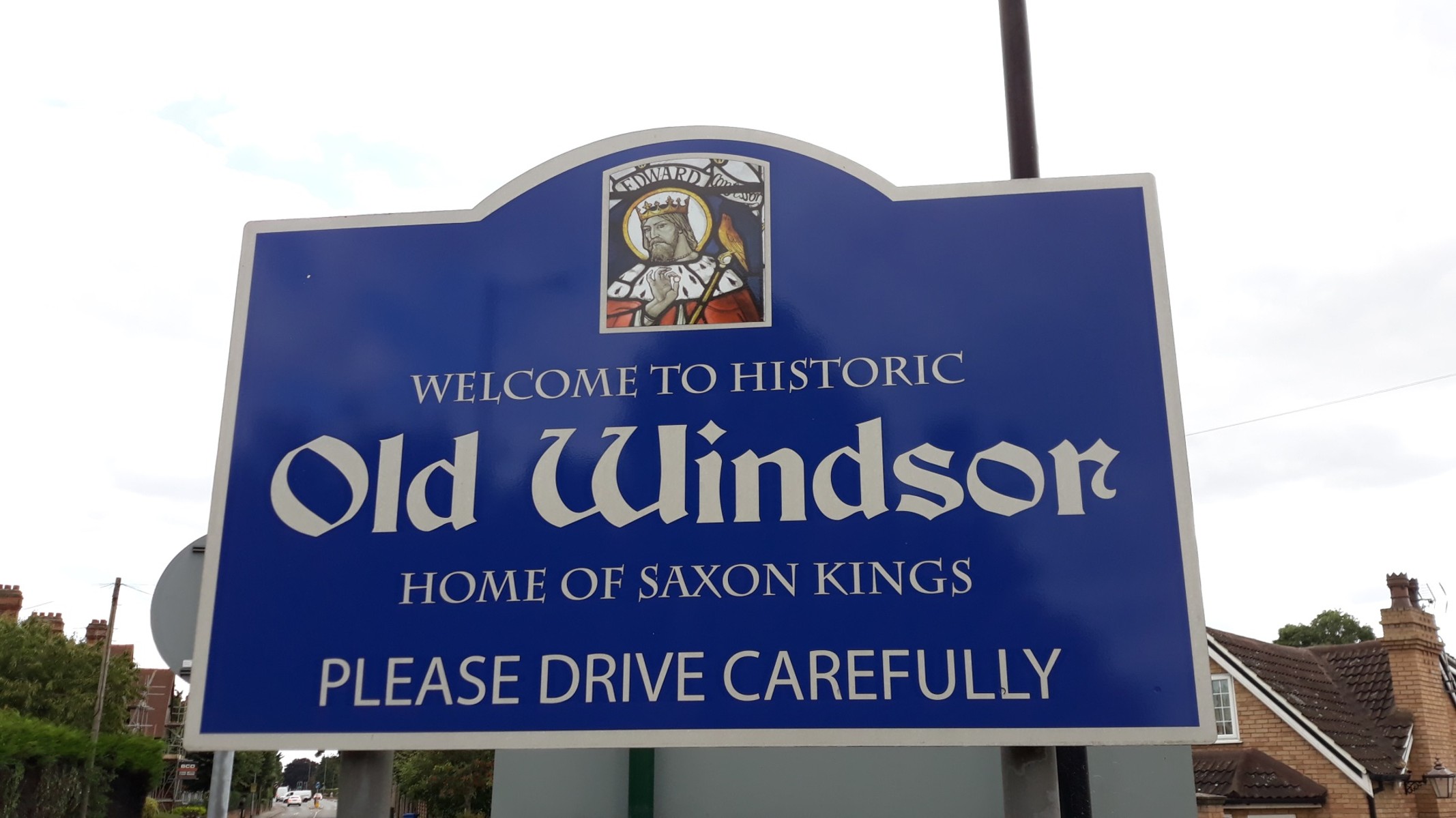
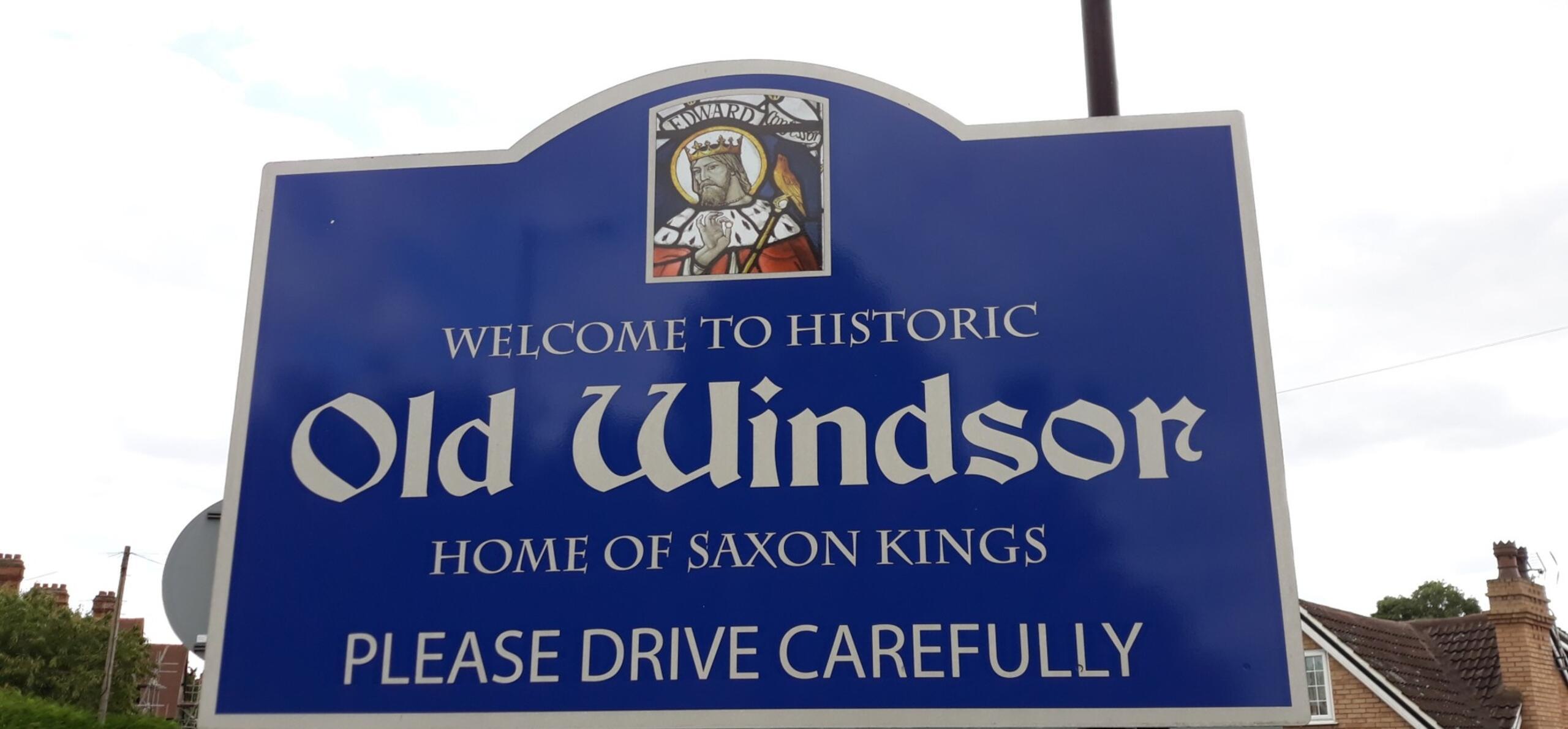
Old Windsor – Home of Saxon Kings. Image courtesy of Roland Smith.
Documentary sources suggest that the site of Kingsbury at Old Windsor was a royal residence of Edward the Confessor prior to the foundation of Windsor Castle by William the Conqueror at New Windsor. However, no archaeological evidence for this settlement had come to light until 1951 when the vicar of the parish noticed ancient pottery in the upcast from a new sewer trench close to the parish church of Saint Peter and Saint Andrew. He collected up the material and sent it to the British Museum who passed it on to Brian Hope-Taylor, an archaeologist based in Surrey and already an influential figure on the British archaeological scene.
Hope-Taylor immediately recognised that the pottery was of Saxon date and that the sewer trench had revealed a significant archaeological site. So began five seasons of excavation between 1953 and 1958, initially on behalf of the Berkshire Archaeological Society and subsequently for the Ministry of Works.
The results of Hope-Taylor’s excavations were impressive. Occupation at Old Windsor commenced in the 7th-century but changed significantly in the early 9th-century with the construction of a large and sophisticated water mill. The mill was served by a great ditch or leat, nearly three quarters of a mile long, and dug across a loop in the River Thames. There was evidence for substantial buildings representing occupation into the 10th- and 11th-centuries. The results were so impressive that Hope-Taylor suggested that he had uncovered part of a Saxon and early Norman royal complex, and the precursor to New Windsor.
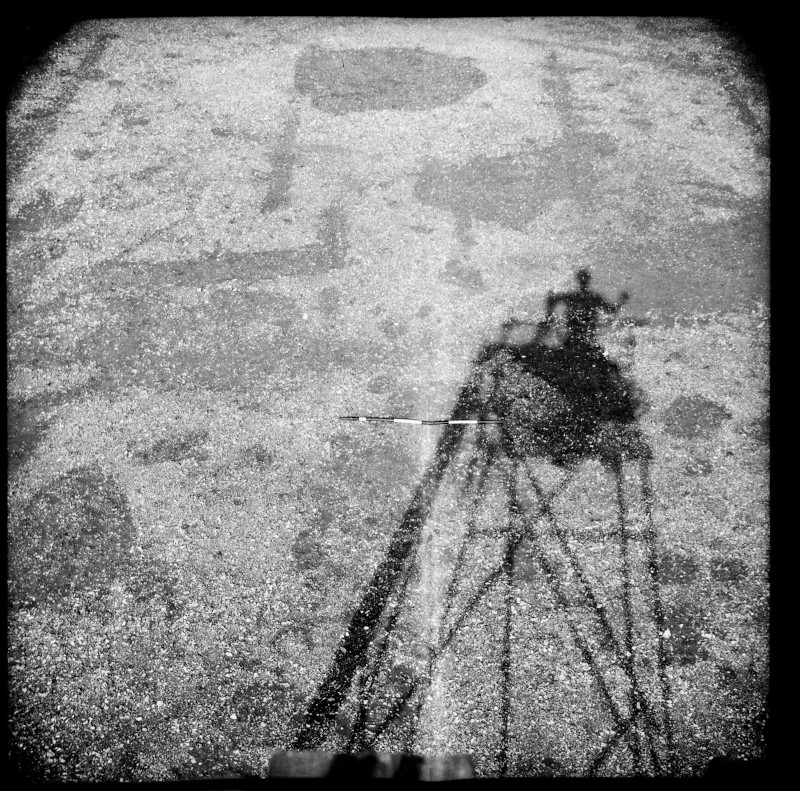
An Old Windsor trench with almost certainly the silhouette of Brian Hope-Taylor at the top of the photo tower. Image copyright Reading Museum (Reading Borough Council). Object number: 1997.27-46.A5
Hope-Taylor concluded his excavations in 1958, but he was not to return to his records until the early 1980s some 25 years after he had finished on site. By this time, the finds had been donated to Reading Museum, while Hope-Taylor retained all the site records at his home in Cambridge. So began several years of analysis but Hope-Taylor failed to produce an excavation report.
Hope-Taylor died in January 2001. His many excavation archives, including that from Old Windsor, were stored in his garage in poor condition. To make matters worse, a house clearance company had already removed some of the archive before it was rescued by Historic Environment Scotland. The archives, including the Old Windsor excavation records, were therefore taken to Edinburgh where they remain to this day. Unusually, the Old Windsor archive is therefore split between Reading and Edinburgh, with an unknown number of records lost before they could be rescued. While Reading Museum holds all the finds from the excavation, it also holds the original photographic record, which is an extremely important part of the archive.
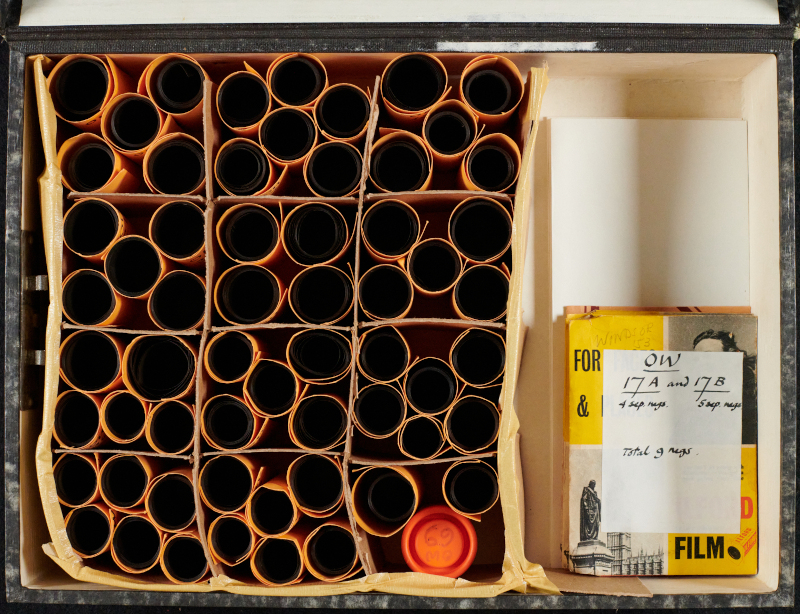
The important Old Windsor photographic archive held by Reading Museum. Image copyright Reading Museum (Reading Borough Council). Object number: 1997.27-46.A5.
Recently members of the Berkshire Archaeological Society and the University of Reading have been working on a project to understand how the archive is split between Reading and Edinburgh, to quantify the huge assemblage of finds, and to re-examine some of the excavation results to test Hope-Taylor’s interpretation of the site. You can read about the finds quantification exercise in a previous blog: The Old Windsor cataloguing project: Unlocking secrets of a Saxon palace | Reading Museum.
The most notable trench excavated by Hope-Taylor was one that contained the structure he interpreted as a huge Saxon mill leat with the remains of a timber water mill. The mill leat or Great Ditch was around 10m across and 3m deep, with waterlogged timbers surviving in the base.
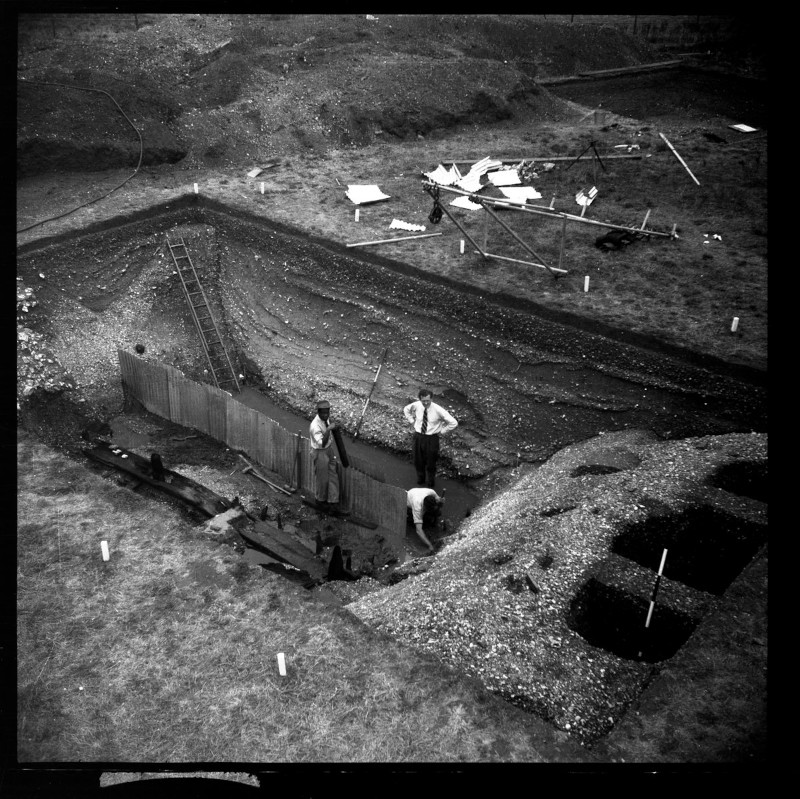
The first section excavated across the infilled mill leat with waterlogged timbers appearing on the base. Image copyright Reading Museum (Reading Borough Council). Object number: 1997.27-46.A5.
By 1958 he had fully exposed what remained of the timber structure. There were three parallel beams running perpendicular across the base of the Great Ditch. These beams were on a gradual slope and between two of the timbers was the remains of a timber chute. Hope-Taylor concluded that these were the remains of a triple, vertical water-wheeled mill. It should be remembered that the Saxon mill at Old Windsor was the first such structure to be excavated in England at that time and so there were no comparison sites to aid his interpretation.
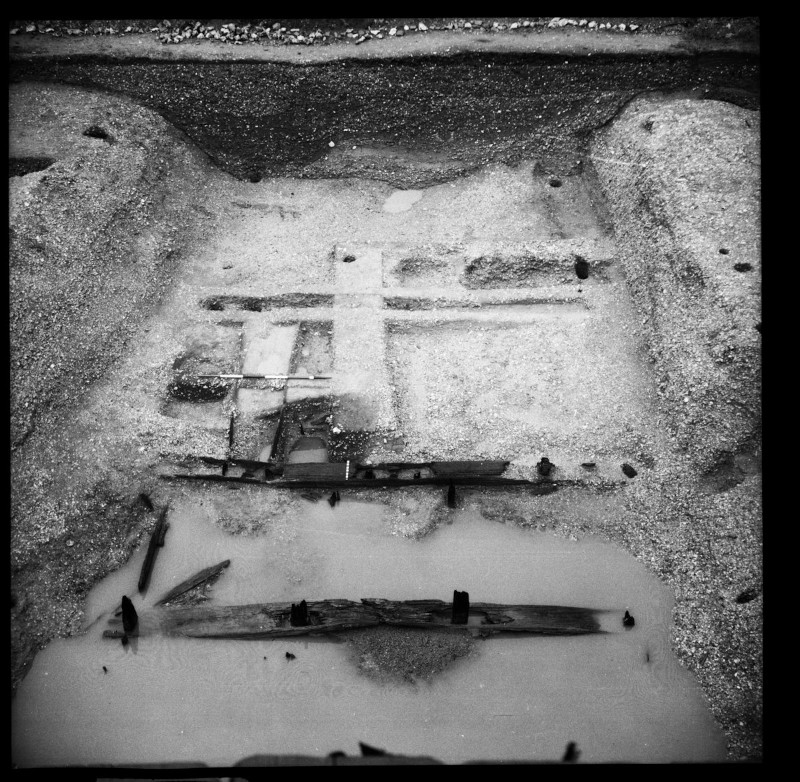
The surviving water mill structure fully excavated on the base of the mill leat. The surviving chute lies below the ranging pole. Image copyright Reading Museum (Reading Borough Council). Object number: 1997.27-46.A5.
We are now able to reinterpret the mill structure, especially in the light of the excavation of other Saxon mill structures in England, most notably a watermill at Tamworth and at Northfleet, Kent. We now believe that this was a horizontal-wheeled mill, with two chutes feeding two horizontal water wheels, with a central bypass channel. The mill and the mill stones would have been housed in the mill house, sitting above the water wheels and the mill leat.
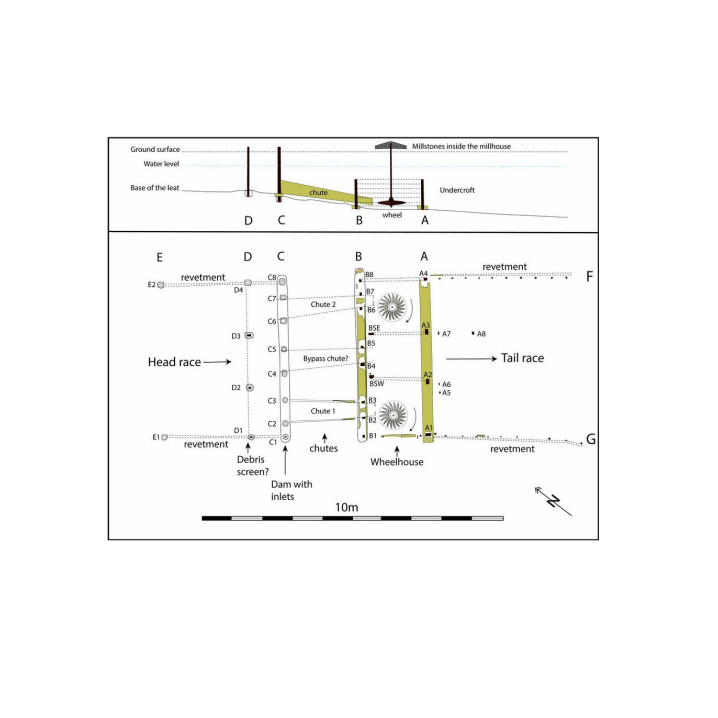
An interpretative reconstruction of the Saxon water mill. Copyright Reading University
So, Hope-Taylor’s identification of a sophisticated Saxon mill was correct, albeit he thought it was operated by vertical, rather than horizontal water wheels as we now understand. That is a testament to his skills as an excavator, especially when there was far less archaeological data available to him then as there is now, some 70 years later.
The excavation also recorded a succession of Saxon timber halls inside the Great Ditch and a large Saxo-Norman settlement spreading beyond the Great Ditch too, as well as some rare and special objects from amongst the huge finds’ assemblage. This rare combination points to the high status of the settlement although only documentary sources, rather than archaeological evidence, will determine any connection with Edward the Confessor.
The most important achievement of our project has been to make all the excavation records accessible online so that the problems of an archive split between Edinburgh and Reading can be overcome. These can be found on Historic Environment Scotland’s website (Old Windsor, Kingsbury | Place | trove.scot) and the Archaeology Data Service (Unlocking Old Windsor: An Assessment of Brian Hope-Taylor's 1953-58 Excavation Archive from Kingsbury, Old Windsor, Berkshire: Metadata). The records include those from the 1950s, the post-excavation work undertaken in the 1980s and the work undertaken for the Unlocking Old Windsor project. We hope that others will now take the opportunity to research further aspects of the important site at Old Windsor in the future.
Roland Smith is one member of the Unlocking Old Windsor project team, along with Darko Maričević, University of Bournemouth, and Gabor Thomas, University of Reading.