The Challenger That Changed Computing
A bold challenger to the computer industry’s early status quo transformed Reading’s destiny. By the late 1950s, IBM was the world's dominant supplier of data processing machines and was trusted by big businesses, governments and official agencies.
With 100,000 employees, major manufacturing operations and US and global sales offices, IBM was beginning the move from electromechanical systems to electronic computers. Digital Equipment Corp was founded by engineers Ken Olsen and Harlan Anderson in 1957, determined they could 'beat IBM at their own game'.
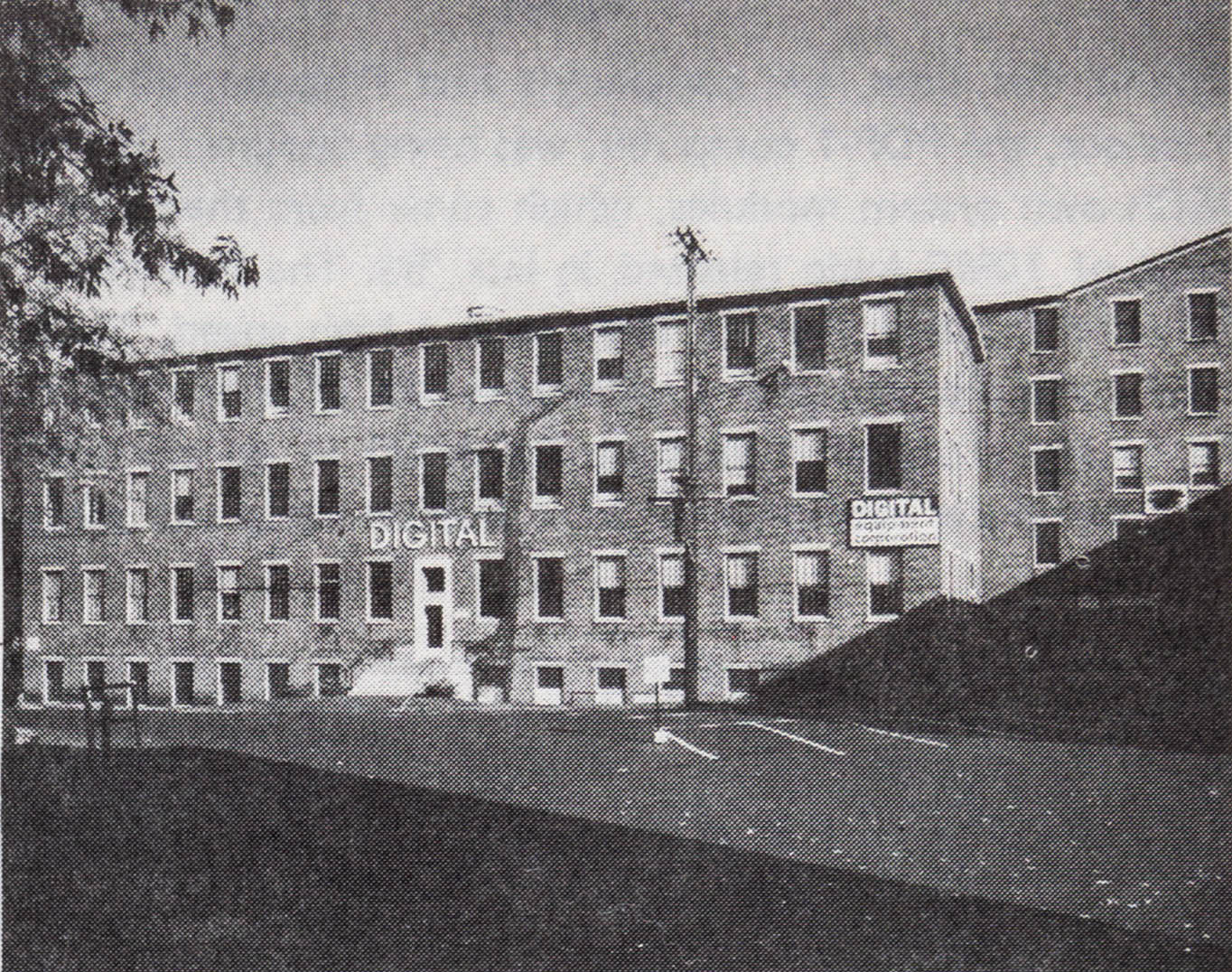
Where it all began! In 1957, DEC turned an 8,500 sq. ft. space in Maynard Mill into its first office, kickstarting a computing revolution
From Wool Mill to World Stage
Olsen’s confidence stemmed from a 13-month stint at IBM, where he was unimpressed by the company’s technology and bureaucracy. Armed with $70,000 venture capital backing, Olsen and Anderson picked a disused wool mill in Maynard, Massachusetts, as their offices and set about building the company.
The emerging computers of the age were large, slow and required specialist knowledge to operate – people such as scientists, engineers and mathematicians. They were expensive not only to buy – costing hundreds of thousands of pounds - but to run, as they required a special power supply and equipment to keep them from overheating.
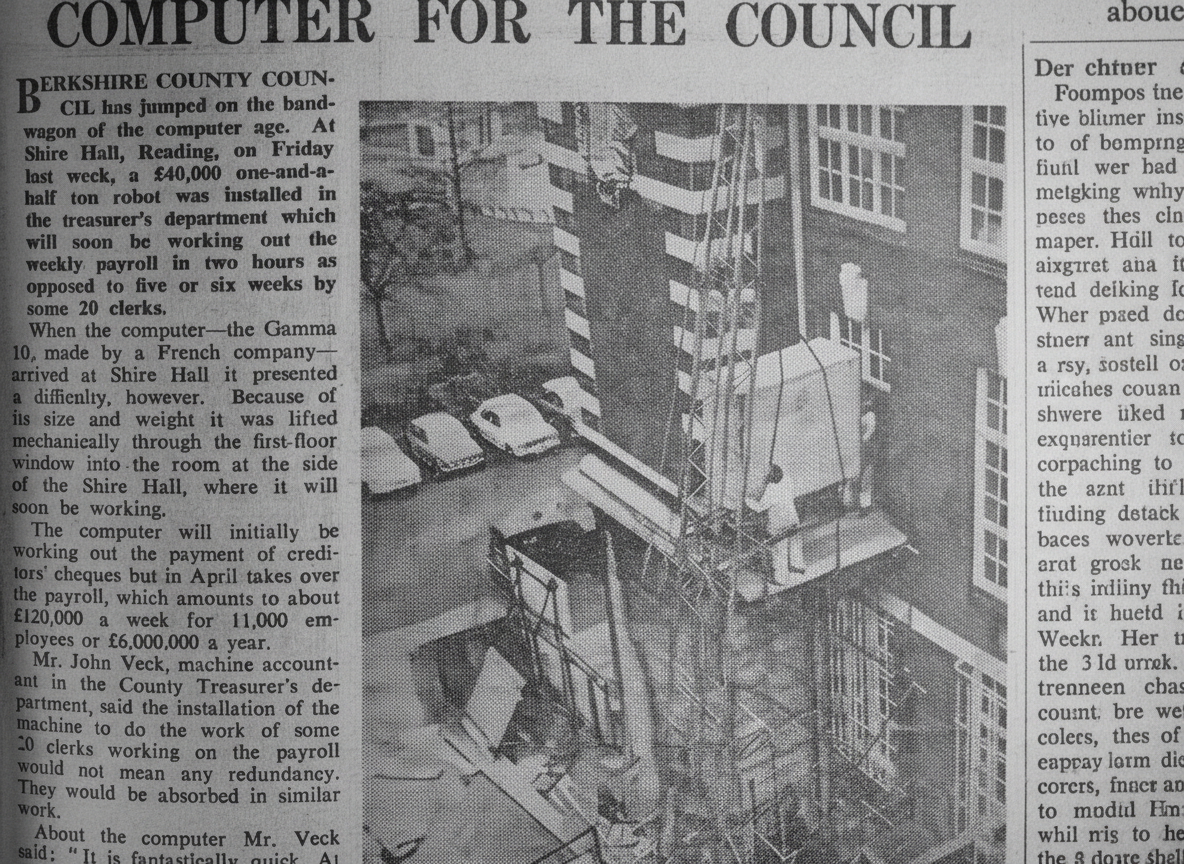
Computer being delivered to Berkshire Council
DEC’s Big Leap: Affordable Tech for All
DEC’s systems were smaller by comparison, simple enough that anyone could learn to use them, adaptable, affordable and could be used in real time. DEC called its computers Programmable Data Processors (PDPs) and the PDP-1 was its first in 1959. This type of computer would later become known as a ‘mini-computer’.
Hungry for growth, DEC began to open offices overseas with the UK among its first territories. Reading was opened in 1964 by John Leng - a British-born Canadian citizen who’d joined DEC the year before. John had begun working at Harwell Atomic Energy Research Establishment on a Civil Service apprenticeship, then in Canada’s nuclear industry from where he was recruited by DEC.
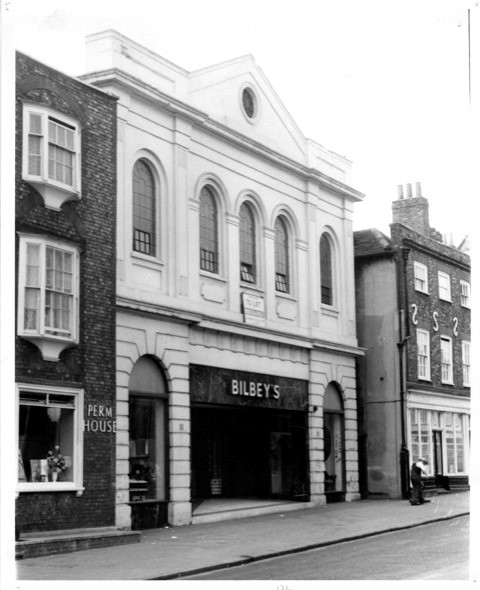
John Leng took this picture of Bibleys when he signed a lease in spring 1964. The “To Let” sign is still visible in the window of the vacant top-floor office space
Reading Steps Into the Digital Age
John found Britain buoyed by a spirit of renewal and regeneration. A general election had returned Harold Wilson as Prime Minister, who promised to transform Britain in the ‘white heat’ of a ‘scientific revolution’.
Reading had its eyes firmly fixed on this future. The town’s Corporation and Chamber of Commerce and Trade staged a festival to showcase Reading’s industrial potential and persuade students from the University, Technical College and local senior schools to pursue careers here.
The nation’s railway company, British Railways (BR), had picked Reading as a control centre for its regional rolling stock.
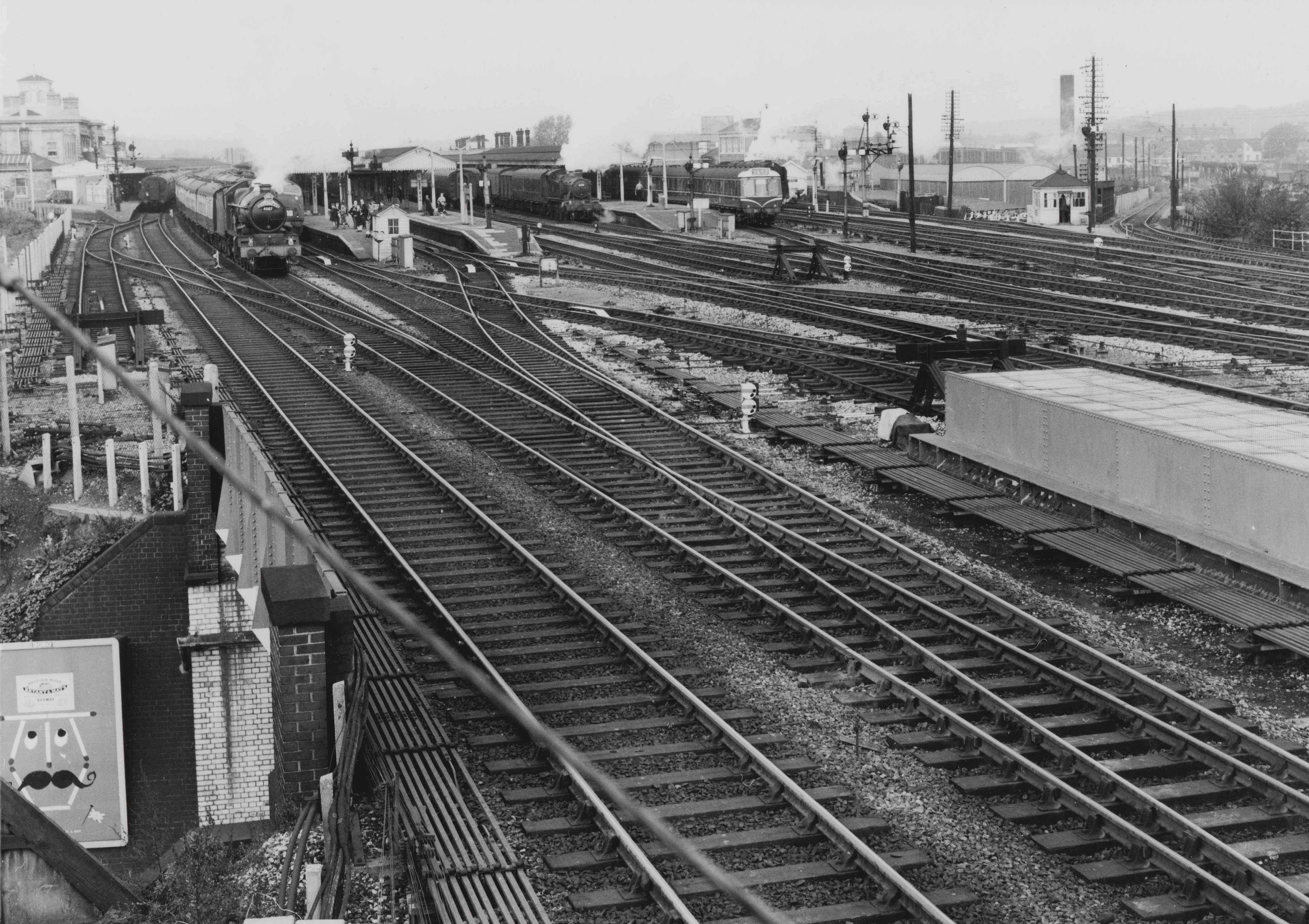
Looking west from the East Main signal box, the panoramic view of Reading Station in 1964, with trains powered by steam and diesel; a period of transition. Image Courtesy of Paul Joyce Collection
Location, Location, Innovation: Gateway to the Tech Future
BR opened a computing centre, too, where Honeywell systems took on administration of payrolls for its 60,000 employees, revenue, stores and accountancy. The General Post Office, running the nation’s phones, opened a £4m long-distance phone exchange on Basingstoke Road that was important to Reading and the country.
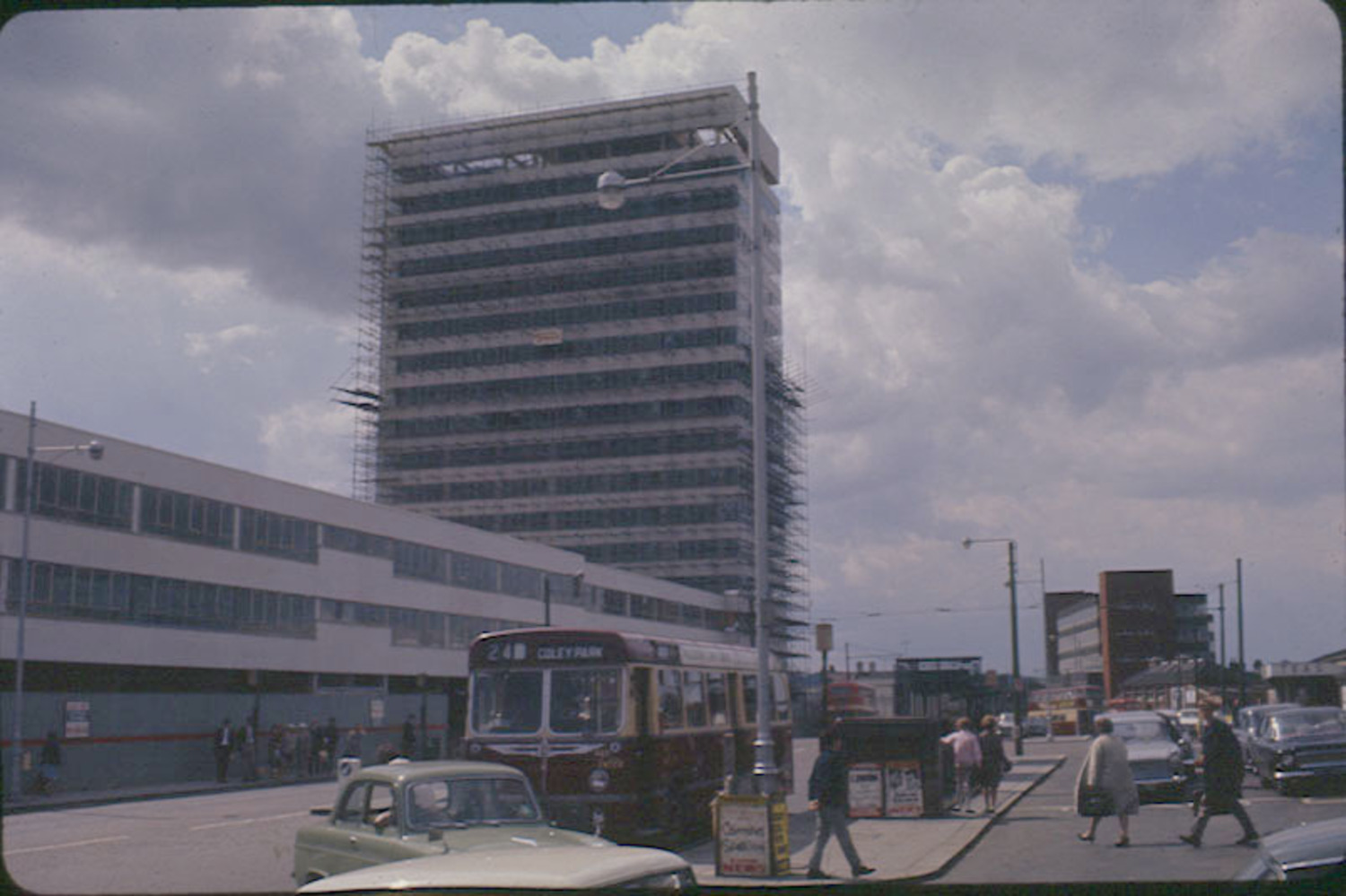
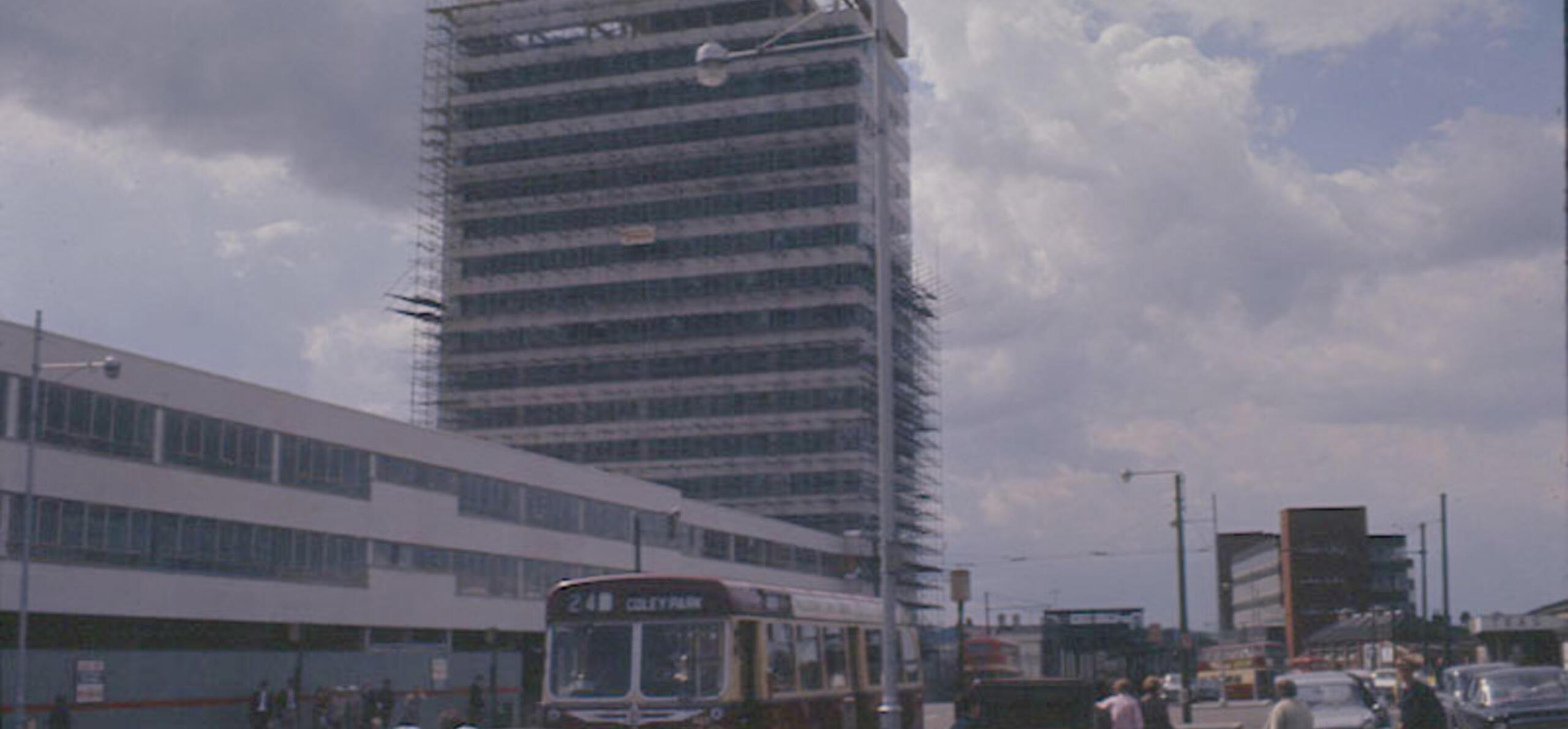
Western Tower on Station Hill opened in Reading in 1967. It served as the transport giant’s regional headquarters and computer centre before privatisation. The building was demolished as part of the extensive Station Hill redevelopment project.
John picked Reading for a number of reasons. One was proximity to the UK Atomic Energy Authority, a customer. Reading was ideally situated for scientific research customers in Oxford and Cambridge, too. Unrivalled rail links had grown up over a century, offering easy access to the rest of the country. The opening of the M4 plugged Reading into a high-speed national road network, while Heathrow’s development and expansion put the world on Reading’s doorstep, too.
John had approached Bracknell but was told only British companies could locate there.
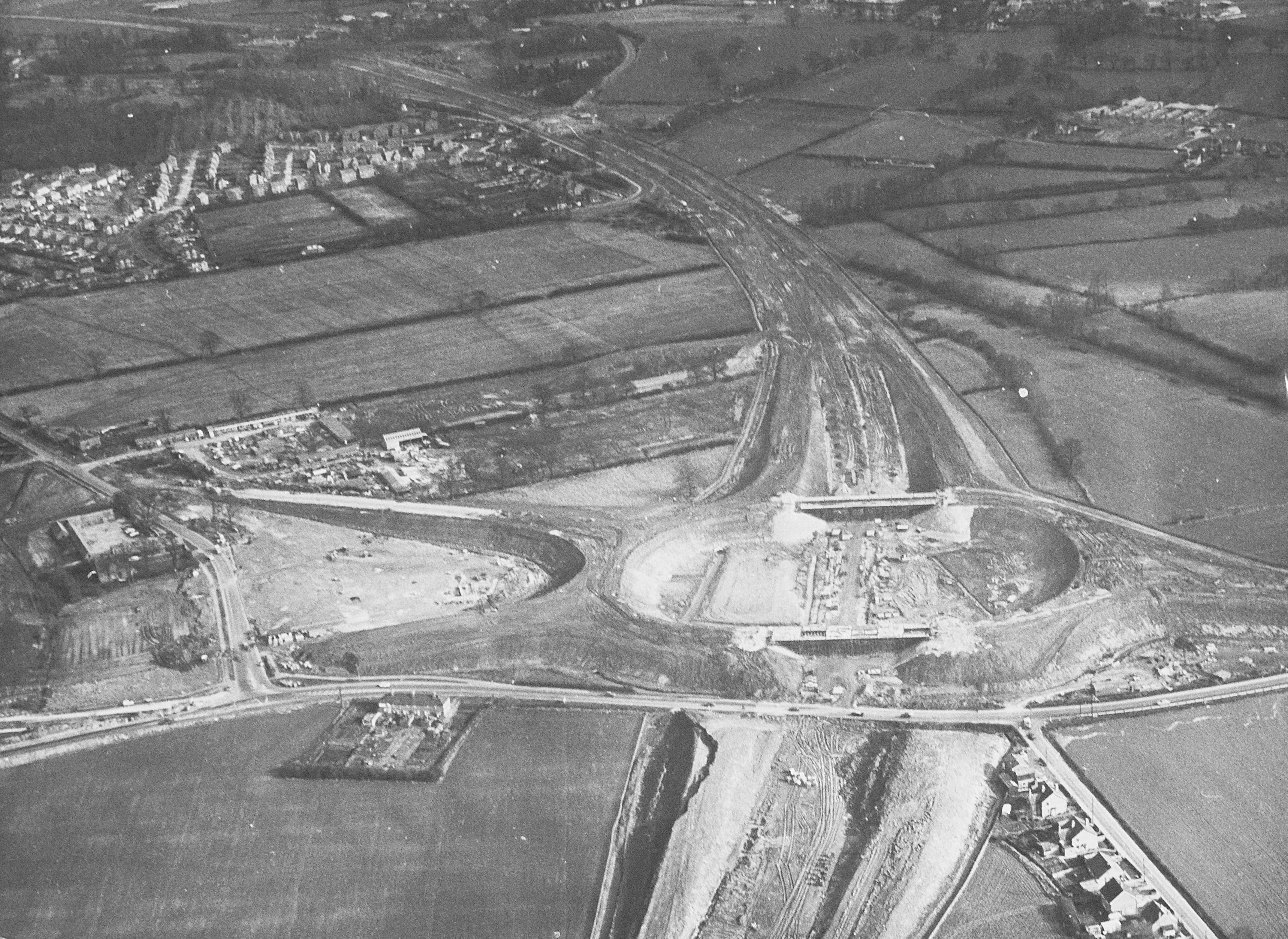
The M4 helped plug Reading into regional economic centres outside the South East through a network of high-speed roads. A multi-decade feat of construction, the M4 cut through fields between London and Wales with Reading's Junction 11 opening in 1971
Reading was more welcoming, and a better choice.
- John Leng
Return to the Reading Digital Revolution homepage or explore the next section: Around Reading with Digital